The knowledge and skills of first-year physics students and how they have changed over the decades.
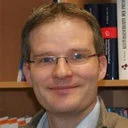
As early as the 1970s, faculty members at German universities lamented that students’ knowledge and skills in physics and mathematics were significantly poorer than those of their own generation. For this reason, a nationwide entrance exam was developed on behalf of the “ Konferenz der Fachbereiche Physik” [Conference of Physics Departments] (KFP), an association of German physics institutes. The test was designed so that the items addressed the relevance to typical requirements in introductory-level education at the University. During the assessment, first-semester students were tested unannounced during regular classes within the first two weeks of their physics program. The survey lasted 90 minutes (10 minutes for demographic variables, 40 minutes for mathematics, and 40 minutes for physics). Deficits among students were already evident in the first survey conducted in 1978 (Krause and Reiners-Logothetidou, 1981). After the tasks were validated—again through the KFP—the exact same test was administered nationwide in 2013 to assess how students’ knowledge and skills had developed (Buschhüter et al., 2016). Following the COVID-19 pandemic, during which many students were taught online, a third wave of the survey took place in 2023 (Gahrmann et al., 2026). For the second and third survey waves, the timing and duration of the survey were kept consistent. Between 24 and 39 universities participated in each survey wave, along with more than 2,000 students per wave. The presentation will showcase and discuss the validation steps for the assessment instrument (including surveys of first-semester instructors, comparison with high school curricula, and predictions of academic success) as well as the temporal progression of students’ knowledge and skills (1978, 2013, 2023). Differences are evident between the individual survey waves. However, these differences are not as large as expected, and in some cases do not align with expectations. In addition, an outlook on the further development of the test instrument—from a paper-and-pencil version to an online test—will be presented. Furthermore, the presentation will demonstrate how the tests could be adapted and validated in various languages with minimal effort.
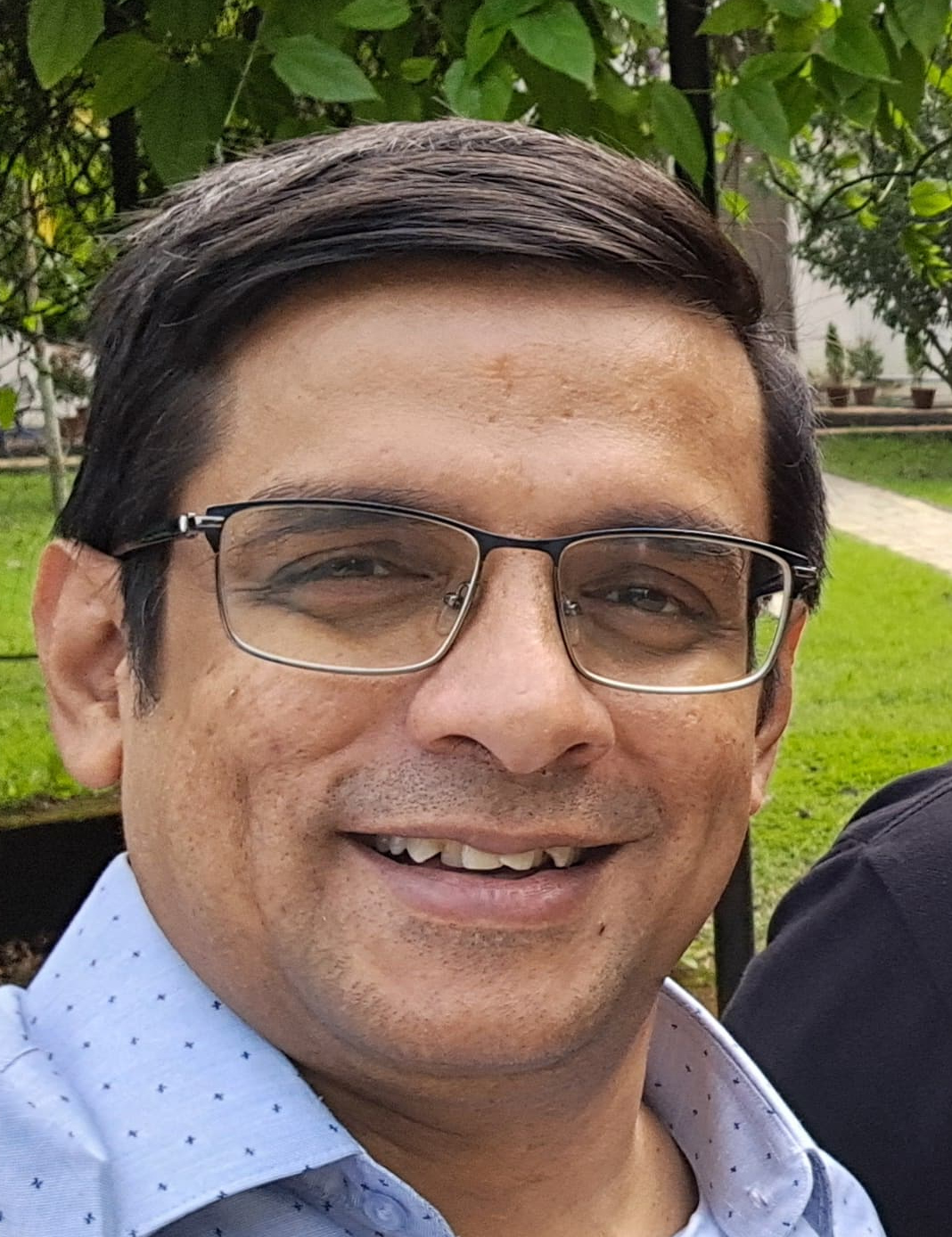
Prof. Anwesh Mazumdar
Dean HBCSE, National Coordinator, Science Olympiads
Mumbai, India
Physics and Astronomy Education and Olympiads, Undergraduate and Asteroseismology Research
Anwesh Mazumdar is currently the Dean, Homi Bhabha Centre for Science Education (HBCSE-TIFR), and the National Coordinator, Science Olympiads in India. He has a background in astrophysics, having obtained his PhD from the Tata Institute of Fundamental Research (TIFR) in 2002. After a few years of postdoctoral research at Observatory of Paris-Meudon in France, Catholic University, Leuven in Belgium, and Yale University in USA, he joined HBCSE as a faculty in 2008. His primary research area is stellar oscillations as a probe of stellar structure and evolution. Since joining HBCSE, he has developed interest in Physics Education Research. He has been leading the national Science Olympiad programme for the past 14 years, and is involved in multiple large impact programmes of HBCSE, besides teaching undergraduate physics as a guest faculty at the UM-DAE Centre for Excellence in Basic Sciences, Mumbai.
Promoting expert practices through Olympiads and undergraduate research
International Olympiads are among the most challenging competitions in science and mathematics for high school students across the world. Apart from thorough content knowledge, solving Olympiad problems requires uncommon skills that are rarely honed in the usual school curriculum. The theoretical tasks of the Olympiad often test students’ heuristic skills such as making suitable approximations, invoking fruitful analogies, using diagrammatic reasoning, exploiting symmetries, connecting diverse ideas from different domains, etc. The experimental tasks are not prescriptive, they require students to plan and set up the experiment, and reward good decision making in terms of the nature and volume of relevant measurements to be made and the appropriate processing of the data to arrive at the conclusions. While such skills are essential in research, there are few opportunities in the standard educational system where these can be practised and mastered. We shall illustrate how the Olympiad programme encourages the cultivation of such expert practices among students. Going a step further, well designed undergraduate research programmes can also imbue students with these skills, motivating and preparing them for successful careers as researchers. We shall share our insights from major national initiatives implemented by HBCSE over more than two decades that aim at promoting expert practices in science and mathematics.
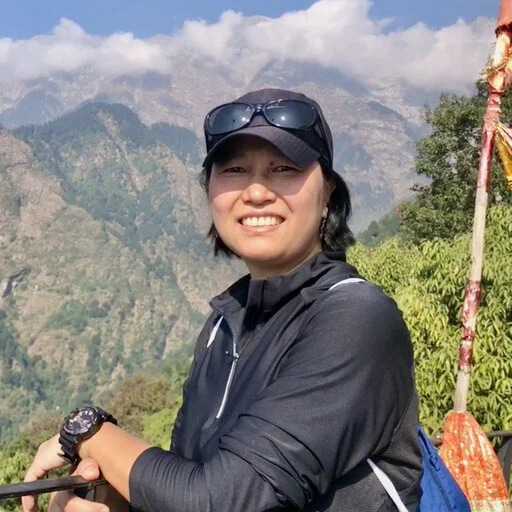
Prof. Chong Shimray
Department of Education in Science and Mathematics, NCERT
Delhi, India
From Policy to Practice: Mainstreaming Environmental Education in School Education in India
The National Policy on Education 1986 (NPE 1986) clearly pointed out that Environmental Education (EE) should be taught in all stages of education. The subsequent curriculum frameworks brought out—National Curriculum Framework for School Education 1988 and the National Curriculum Framework 2005 took forward these recommendations by translating them into curricular practice. Similarly, the National Education Policy 2020 strongly emphasized EE and the same has been translated in the National Curriculum Framework for School Education 2023 (NCF-SE 2023). Curricular materials are being prepared in line with this. With India’s education system in different states and Union Territories guided, though not mandated, by these policies and curriculum frameworks, they present India’s very positive outlook towards EE. The introduction of EE as a separate mandatory subject in Grade 10 is especially noteworthy. It is also significant to mention that India is perhaps the only country where the Supreme Court has mandated environmental education in schools. Together, they provide a strong basis for the robust implementation of EE in schools.
Efforts have been made to integrate EE in the curriculum, especially textbooks. Indeed, in terms of contents, EE related concepts and concerns can be found spread across different subjects and grades, not just in the textbooks brought out based on NCF-SE 2023 but even in the previous sets of textbooks. Yet, EE continues to be manifested or is seen in two extremes—either as some concepts to be learned or as some side activities to be performed, missing the whole purpose of developing a mindset to address environmental issues. Therefore, given the present status of EE in India, describing it as “sidelined” would not be an exaggeration. If EE is to be “streamlined” there are key areas that need our attention—professional development (pre-service and in-service), assessment, and a few others, which this paper will be attempting to address.
From Observing the Universe to Enacting Its Models
Embodied and Interdisciplinary Modelling in Astronomy Education
Astronomy offers a distinctive context for science education because much of what is studied cannot be directly manipulated or experienced at human scales. Understanding planetary motion, distances, time, or the structure of the Universe therefore requires learners to move between observations, representations, mathematical relationships, and theoretical models. This raises a fundamental question for science education: how can learners move meaningfully between what they observe, what they represent, and what they model?
I will explore this question through the perspective of embodied cognition, arguing that scientific modelling should not be understood only as the construction or interpretation of symbolic and mathematical representations. Modelling also involves observing, acting, measuring, comparing, coordinating spatial and temporal relations, and progressively establishing meaning through interaction with a material and social environment. From this perspective, the body is not merely a means of engaging learners or a pedagogical aid: it can become an instrument for scientific inquiry and modelling.
The Human Orrery offers a way to explore what embodied modelling can mean in practice. In this kinaesthetic model, learners physically enact the motions of celestial bodies by walking planetary orbits. Their movements can be coordinated with time, measurements can be made of distances and durations, and astronomical observations can subsequently be represented and analysed mathematically. Such activities create a bridge between bodily experience and increasingly abstract representations of astronomical phenomena. They also reveal important tensions: spatial and temporal scales may be difficult to coordinate, and an embodied representation does not automatically produce conceptual understanding. Embodiment can therefore be considered not as a simplification of scientific modelling, but as another level at which modelling takes place.
The broader issue is therefore not simply whether embodied activities can help students learn astronomy, but what they reveal about the nature of scientific modelling itself: Can embodied experience provide a meaningful pathway between observation and mathematical abstraction, and how might this contribute to a more interdisciplinary conception of science education?
Course-based Undergraduate Research Experiences (CUREs): What, why, and how ?
Research experiences are championed for their potential to promote undergraduate students’ personal and professional development. Yet, there is much more demand for research experience in the natural sciences than can be accommodated in traditional, internship-style research experiences. Faculty in higher education across the US and around the world have responded to the need for scalable approaches to engaging undergraduates in research by developing Course-based Undergraduate Research Experiences, or CUREs. CUREs involve all students enrolled in a course in addressing research problems or questions of interest to the broader community. Despite the growth in CURE offerings, questions remain about how to design and implement these courses to foster student persistence and success in STEM. This presentation will describe an early conceptual model of features that make CUREs distinctive as learning experiences and influential for students. The presentation will then highlight results from a series of studies aimed at testing this model and identifying other aspects of CURE instruction that influence indicators of student persistence and success in the sciences.
Prof. Gabriele Kaiser
University of Hamburg, Hamburg, Germany & East China Normal University, Shanghai, China
A survey on the recent discourse in competence research on mathematics teachers and its links to expertise research
In the recent discourse on the theoretical foundation of the teaching profession, several different paradigmatic approaches have emerged. The competence-oriented approach to teacher professionalism has strongly influenced the discourse through its links with extensive large-scale studies (amongst other the Teacher Education and Development Study (TEDS-M Study)). The various theoretical frameworks developed within this discourse refer on the one hand to Shulman's approach to pedagogical content knowledge and thus differentiate between various knowledge-related domains. On the other hand, cognitive as well as affective and volitional aspects are considered. The discourse has evolved from an initially dominant cognitive perspective with a focus on teachers' knowledge to the inclusion of a situation-specific perspective mainly conceptualized as teachers’ professional noticing. In the paper theoretical and empirical results from the TEDS Research program will be used to illustrate the development of the aforementioned discourse.
Finally, perspectives for the further development of the discourse will be discussed taking up the performance-oriented expertise discourse, which has so far been largely limited to well-structured domains and which may broaden our understanding of the teaching profession.
Dr. Igor' Kontorovich
The University of Hong Kong
Pok Fu Lam, Hong Kong
Mathematics learning and teaching at the university level
Didactics of university mathematics: the story of transition from cognitive to discursive approaches
Research into University Mathematics Education (UME) has undergone a profound theoretical transformation over the past four decades. This presentation traces that trajectory, from its origins in Advanced Mathematical Thinking (AMT) — a field grounded largely in Piagetian, cognitive-psychological paradigms — to the diverse, discursively and socio-culturally inflected UME research landscape of today. The talk will first recap the arguments that convinced the mathematics education community that university mathematics teaching and learning warrants exploration as a special didactical context in its own right, with unique institutional affordances. These include teachers who are typically research mathematicians rather than trained educators, a lecture-dominated pedagogical format uncommon at other levels, and specific disciplinary norms around rigour, proof, and formalism that must be renegotiated as students cross the secondary–tertiary threshold. These institutional particularities, alongside the growing recognition that mathematics is taught not only within mathematics departments but as a service subject with its own applications, helped establish UME as demanding dedicated theoretical and empirical attention. The talk will argue that this movement — from cognitive to discursive — should not be read as a simple replacement of one paradigm by another, but as a widening and enrichment of the field's theoretical toolkit.
Prof. Mei-Hung Chiu,
National Taiwan Normal University
Taipei City, Republic of China (Taiwan)
From Assessment to Inquiry: Exploring the Potential of AI in Science Education
The rapid advancement of Artificial Intelligence (AI) is transforming the landscape of science education, creating new opportunities and challenges for teaching, learning, assessment, and educational research. Increasingly, studies have explored how AI can be used appropriately and effectively to support science learning, teaching, and research. In this presentation, I will share three cases that illustrate both the potential and limitations of AI in science education, highlighting what AI can and cannot do in educational research and classroom practice.
The first case examines the use of machine learning for automated scoring of open-ended science assessment responses. Data were collected from 896 students in Grades 10–12 in northern Taiwan who had previously studied chemistry in Grades 8 and 9. The findings indicate that machine-learning-based automated scoring can be applied not only to English-language responses but also to responses written in Chinese, achieving acceptable levels of reliability and validity. These results demonstrate the potential of AI-assisted assessment to support large-scale educational evaluation.
The second case focuses on chemistry textbook analysis. Textbook analysis has traditionally been time-consuming and labor-intensive, despite the central role textbooks play in guiding both teaching and learning. Using Latent Dirichlet Allocation (LDA), a machine learning technique for topic modeling, we analyzed six Taiwan high school chemistry textbooks and identified seven major content themes. The analysis revealed different patterns of topic progression and interconnections among key concepts, providing insights into curriculum coherence, content alignment, and instructional planning.
The third case proposes an inquiry-based framework for integrating generative AI into science inquiry activities. The framework illustrates how generative AI can support students' questioning, evidence evaluation, explanation construction, and reflection while also highlighting the importance of critical engagement with AI-generated information.
Drawing upon these three cases, I will discuss the competencies that educators and researchers need to integrate AI into science education effectively. I will conclude by proposing guidelines and recommendations for the integration of AI in chemistry education, with the goals of deepening students' epistemic understanding of disciplinary knowledge, fostering interdisciplinary connections, and promoting the application of knowledge in authentic contexts—key dimensions of meaningful learning in an increasingly AI-driven world.
Smartphone Experiments with phyphox: From Technology to Teaching Practice
Smartphones have evolved into powerful, sensor-rich devices that provide unprecedented opportunities for experimental science education. Equipped with a vast selection of sensors, they enable a wide range of experiments using modern data-acquisition techniques without requiring specialized laboratory equipment. The free and open source app phyphox (physical phone experiments) has been specifically developed at the RWTH Aachen University to transform these sensors into versatile scientific instruments, allowing learners to collect, analyze, and visualize data in real time while engaging with authentic scientific inquiry.
This talk presents the technological possibilities for using smartphones as measuring devices and gives examples of a wide range of educational settings as well as different concepts for how smartphone experiments can be used.
The technological possibilities are facilitated by the breadth of sensors available in modern smartphones. In addition to the commonly used motion and orientation sensors, the talk explores the potential of microphones, cameras, and other integrated components, demonstrating how familiar everyday devices can serve as accessible yet capable scientific instruments. Furthermore, phyphox allows sensors to be combined and enables customization of the user interface as well as experiment-specific data analysis and incorporation of external sensors via Bluetooth such as self-built Arduino-based devices.
Beyond showcasing experimental examples, the presentation discusses several educational settings for incorporating smartphone experiments into teaching, ranging from secondary school classrooms and university teaching to laboratory courses and informal learning environments. Each of these offers different concepts for incorporating smartphones into experimental tasks, from individual investigative learning to real-time collaborative experiments for large audiences. Smartphone experiments can take the form of short experimental assignments, project-based learning formats in which students design and conduct their own investigations, and large-scale live experiments that combine measurements from many participants to generate rich datasets for immediate analysis – or even a planet-wide experiment conducted by users around the globe.
Conveners
Aniket Sule
Shweta S. Naik
Contact Details
Homi Bhabha Centre for Science Education
Tata Institute of Fundamental Research
V. N. Purav Marg, Mankhurd
Mumbai - 400088, India